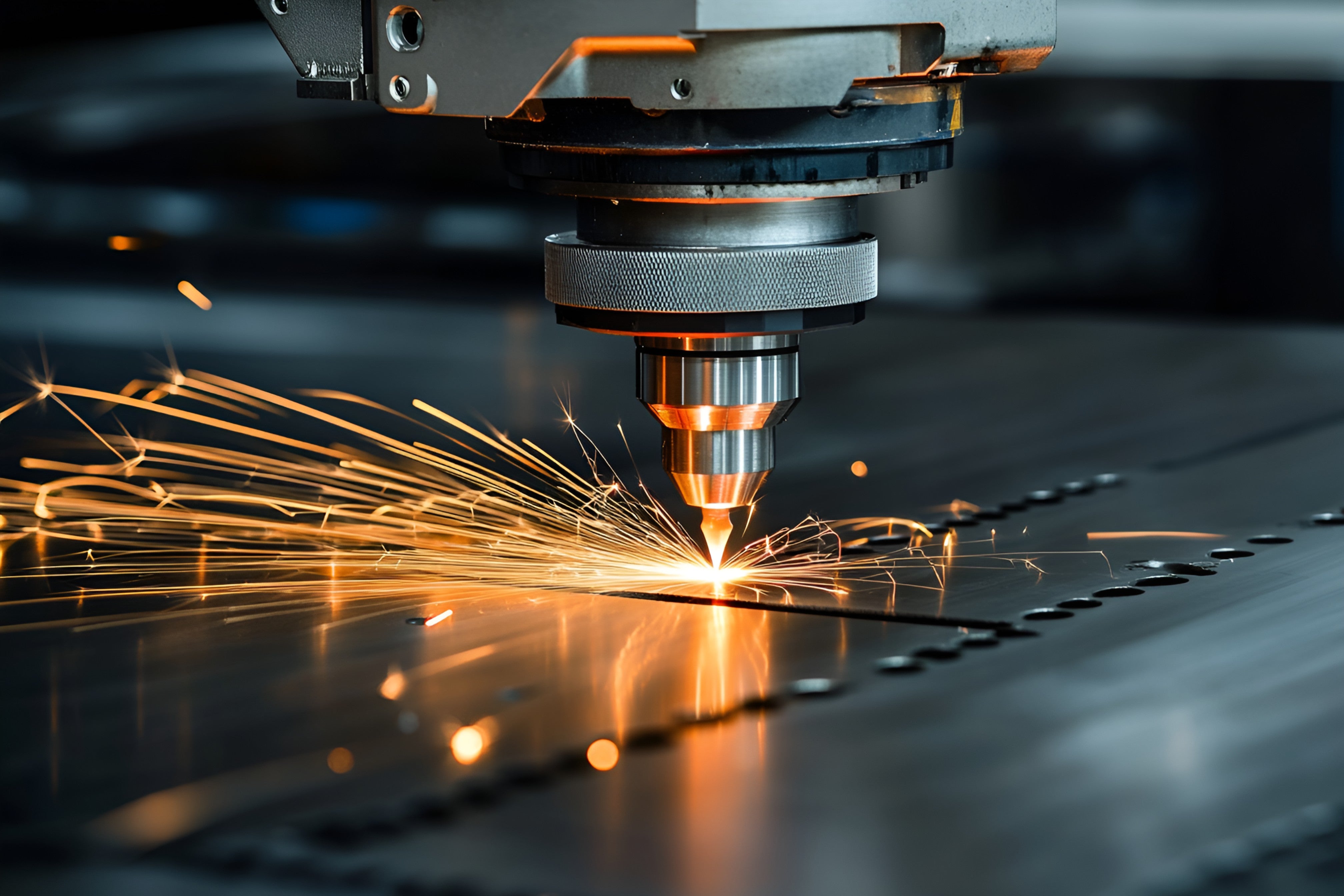
Cutting the Future, Manufacturing Unlimited: Unveiling the Seven Core Advantages of Laser Cutting Machines
In today's rapidly evolving industrial manufacturing landscape, efficiency, precision, and flexibility are keys to success. Among numerous processing equipment, laser cutting machines shine as a brilliant star, reshaping metal processing with unprecedented power. From high-precision components in aerospace to the intricate casing of the smartphone in your hand, laser cutting technology likely plays a role behind the scenes.
So, what exactly makes laser cutting machines so indispensable, earning them the status of a "standard" and "powerful tool" in modern factories? Let's delve into their seven core advantages.
1. Extreme Precision, Sculpting Beauty to the Millimeter
One of the core strengths of laser cutting is its unparalleled precision. It cuts using a highly focused, extremely thin laser beam, akin to a tireless "micro-sculptor."
-
Narrow Kerf, High Accuracy: The laser spot diameter can be as small as a few microns, enabling the cutting of extremely intricate and complex patterns. The cut is smooth and burr-free, with tolerances easily maintained within ±0.1mm.
-
Excellent Repeatability: Once the program is set, a laser cutter can reproduce the same cut thousands of times with perfect consistency, ensuring unmatched uniformity in mass production.
Ideal For: Medical devices, electronic components, jewelry, precision instruments, and other industries demanding the highest accuracy.
2. Superior Efficiency, Staying Ahead of the Market
"Time is money" is profoundly true in manufacturing. Laser cutting machines, integrated with CNC technology, offer a high degree of automation.
-
High-Speed Cutting: Especially when cutting sheet metal, laser cutting speeds far surpass those of traditional plasma, flame, and wire cutting.
-
Seamless Integration: When paired with automatic loading/unloading systems and intelligent nesting software, they enable 24/7 uninterrupted production, significantly boosting overall efficiency and shortening delivery times.
3. Unmatched Flexibility, One Machine for Countless Changes
The laser cutter is the epitome of "flexible manufacturing." It breaks free from the constraints of traditional tooling, making customization and small-batch production effortless.
-
"Tool-less" Triumph: No need for expensive molds. Simply modify the design file on a computer to quickly switch cutting patterns, making it ideal for R&D prototyping and custom orders.
-
Versatile Machine: The same equipment can not only cut but also easily perform drilling, engraving, and marking, truly achieving multiple functions with one machine.
4. Wide Material Compatibility, Cutting Almost Anything
From hard metals to flexible fabrics, laser cutters (particularly those with different laser sources and wavelengths) demonstrate powerful material adaptability.
-
Metals: Carbon steel, stainless steel, aluminum alloy, brass, titanium alloy, etc., can all be cut efficiently.
-
Non-Metals: Acrylic, wood, fabric, leather, glass, stone, etc., are also suitable. (Note: CO2 lasers are better for non-metals, while fiber lasers are primarily for metals).
This wide applicability makes it a universal platform for cross-industry applications.
5. Non-Contact Processing, Gentle on Materials
Unlike traditional mechanical cutting, which involves forceful contact, laser cutting is a "non-contact" process.
-
No Mechanical Stress: The laser beam does not physically touch the material, thus eliminating mechanical pressure or distortion on the workpiece. This is particularly suitable for processing flexible, thin-walled, or fragile parts.
-
No Tool Wear: There are no cutting tools to wear out or replace. This saves on consumable costs and avoids quality inconsistencies caused by tool wear.
6. Superior Cut Quality, Eliminating Secondary Processes
Laser cutting produces smooth, clean edges with minimal to no dross or burrs.
-
Ready-to-Use Parts: The high cut quality means many workpieces can proceed directly to the next manufacturing step, saving significant time and labor costs associated with secondary finishing like grinding or polishing.
-
Small Heat-Affected Zone (HAZ): The high speed and concentrated heat input result in minimal heat transfer to the material, leading to a very small Heat-Affected Zone. This prevents changes in material properties and warping.
7. Automation and Smart Manufacturing, A Cornerstone of Industry 4.0
Modern laser cutters are perfect enablers for smart manufacturing. They can be easily integrated into automated production lines, managed and scheduled via MES (Manufacturing Execution Systems), and enable data collection, remote monitoring, and predictive maintenance. They lay a solid foundation for embracing "Industry 4.0" and building the "Smart Factory."
Conclusion
In summary, with their high precision, efficiency, flexibility, broad material compatibility, non-contact processing, excellent cut quality, and high degree of automation, laser cutting machines have revolutionized traditional manufacturing. They are not just machines; they are a strategic investment for enhancing core competitiveness, reducing costs, improving efficiency, and embracing the future of manufacturing.
If you are looking to inject new vitality into your production processes, investing in a laser cutting machine is undoubtedly a wise choice for cutting a path to a successful future!